Move QuickBooks to New Computer: Step-by-Step Migration & Expert Fix Guide
-
Move QuickBooks to New Computer: Complete Expert Guide
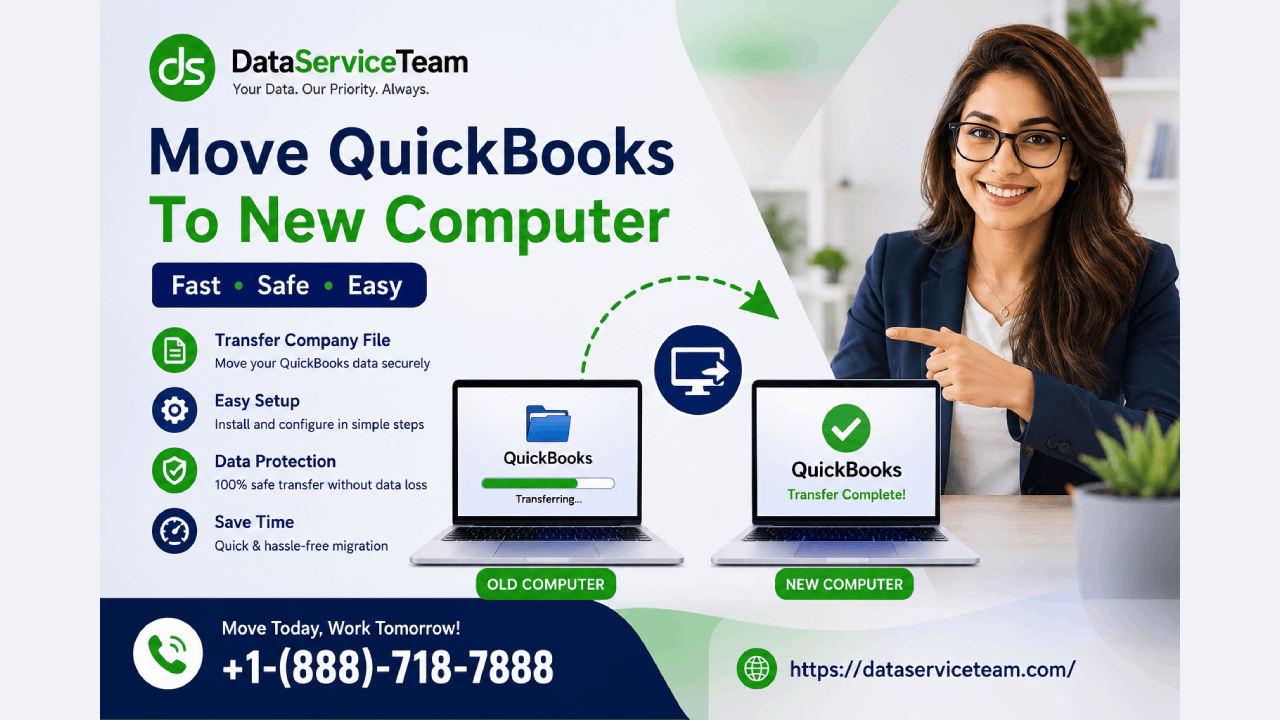
As a certified QuickBooks ProAdvisor perspective, moving QuickBooks to a new computer is a critical process that must be handled carefully to protect company files, financial records, and software configuration. A proper migration ensures business continuity without data loss, downtime, or licensing issues.
Whether you are upgrading your system or replacing outdated hardware, following the correct steps ensures a smooth transition.
Why You Need to Move QuickBooks to a New Computer
Businesses often migrate QuickBooks for several reasons:
Upgrading to a faster system
Replacing damaged hardware
Improving system performance
Enhancing security and backups
Expanding accounting operations
Updating to newer Windows versionsProper migration ensures uninterrupted financial management and accurate reporting.
Step-by-Step Expert Migration Process
Step 1: Create a Full Company Backup
Before anything else, create a secure backup of your QuickBooks company file to avoid data loss.
Step 2: Install QuickBooks on New Computer
Download and install the same or compatible version of QuickBooks Desktop.
Step 3: Transfer Company Files
Move backup files using USB, external drive, or secure cloud storage.
Step 4: Restore Backup on New System
Open QuickBooks and restore your company file from backup.
Step 5: Activate License
Enter your license and product information to activate QuickBooks.
Step 6: Verify Data Integrity
Check reports, invoices, payroll, and transactions to ensure everything is intact.
Common Issues When Moving QuickBooks
Missing company files after transfer
License activation errors
Corrupted backup files
Version compatibility issues
Network configuration problems
Multi-user mode not workingExpert Troubleshooting Steps
- Use Latest QuickBooks Version
Ensure both systems are running updated versions to avoid compatibility issues.
- Verify Backup File Integrity
Test backup before restoring to new computer.
- Run as Administrator
Avoid permission issues during installation and restore.
- Check Firewall Settings
Ensure QuickBooks is not blocked by Windows Firewall.
Run diagnostic tools to fix migration-related errors.
Real-World Example
A growing accounting firm upgraded all systems to new computers. Initially, their QuickBooks migration failed due to version mismatch and missing backup files.
After correcting version compatibility and restoring validated backups, all company files were successfully transferred. Payroll, invoices, and reports were fully restored without data loss.
Best Practices for Smooth Migration
Always keep multiple backups
Use external storage for transfer
Match QuickBooks versions on both systems
Avoid interrupting restore process
Verify data after migration
Keep license details readyFAQs
Can I move QuickBooks without losing data?
Yes, if you create and restore backups correctly, no data will be lost.
Do I need to reinstall QuickBooks on new computer?
Yes, installation is required before restoring company files.
What if my backup file is corrupted?
You may need professional data recovery assistance.
Can I use QuickBooks on two computers?
Yes, depending on your license type and configuration.
Conclusion
Moving QuickBooks to a new computer is a sensitive process that requires proper planning, secure backups, and correct installation steps. When done correctly, it ensures uninterrupted accounting operations and full data protection.
For businesses facing migration errors, activation issues, or data transfer challenges, expert assistance ensures safe and reliable results.
For professional QuickBooks migration support and troubleshooting, contact Data Service Team at +1-(888)-718-7888 for fast, accurate, and trusted solutions tailored to your business needs.